

What Happens During a Skin Check? What to Expect at Your Appointment
What a skin check looks like, from the moment you sit down to the moment you leave: including how to prepare and what may happen next.
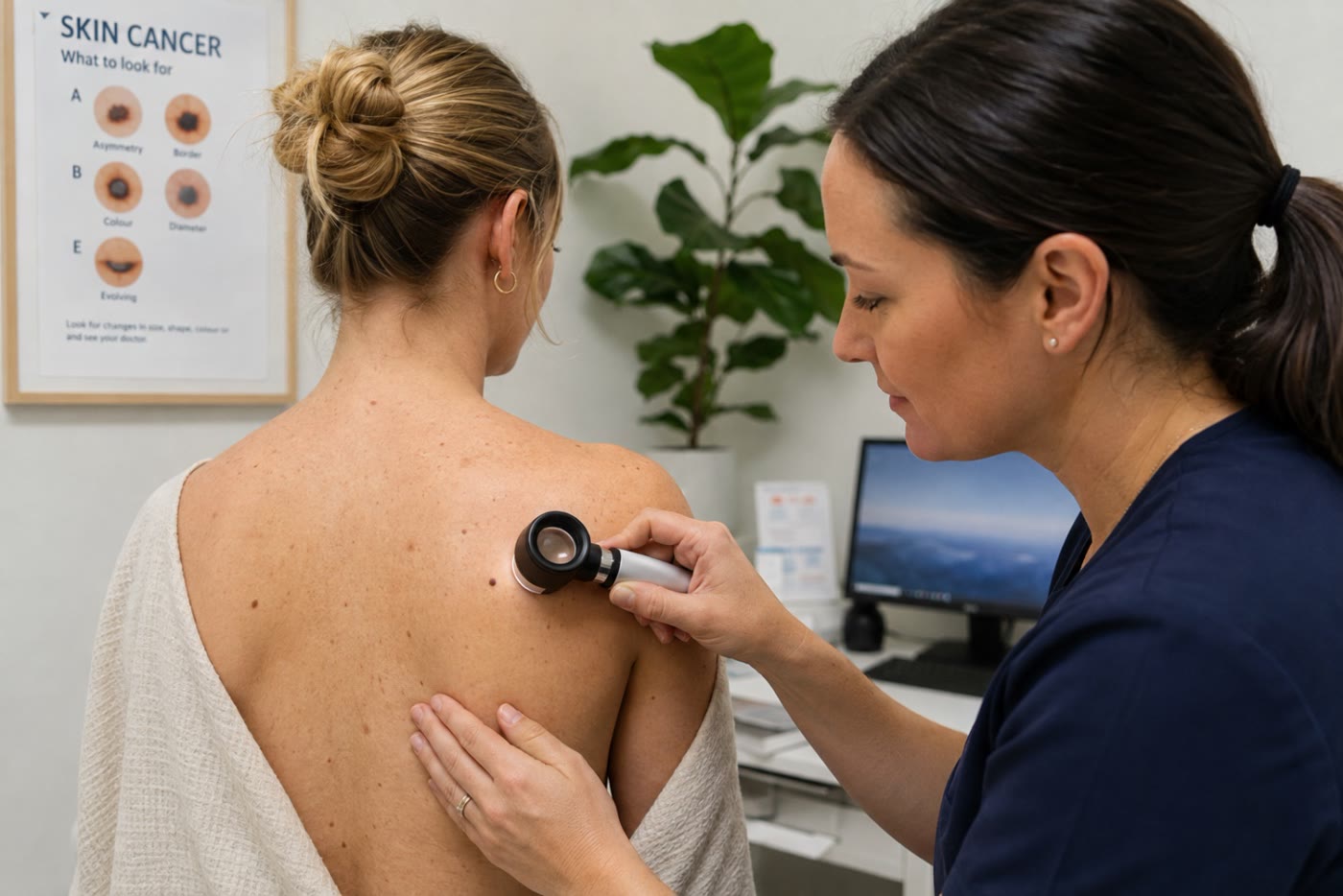
You’ve noticed a spot. Maybe it’s one you’ve had for years and it looks a bit different lately, or maybe it’s new and you can’t quite work out if it was there last summer. You’ve thought about getting it checked, but you’re not entirely sure what a skin check actually involves and that uncertainty is often what stops people from booking in the first place.
It’s a reasonable thing to wonder about. Here’s what a skin check actually looks like, from the moment you sit down to the moment you leave.
What is a skin check?
A skin check is a visual examination of your skin, usually performed by a GP, looking for anything that could be a sign of skin cancer including melanoma and the more common but less dangerous non-melanoma skin cancers, basal cell carcinoma and squamous cell carcinoma. It’s not a blood test or a scan. It’s a doctor systematically looking at your skin, sometimes with the help of a handheld magnifying tool called a dermatoscope, to get a closer look at anything that stands out.
How long does a skin check take?
A typical skin check runs somewhere between 15 and 30 minutes, though this can vary depending on how many spots need a closer look and your individual history.
If you’ve had skin cancer before, have a lot of moles, or your doctor wants to examine something in more detail, it may take a little longer. There’s no need to rush this: a thorough check is worth more than a fast one.
What actually happens during the appointment
Your GP will usually start with a conversation, not an examination. Expect questions about your sun exposure over the years, whether skin cancer runs in your family, any spots you’ve noticed changing, and your general skin type: fair skin that burns easily carries a different risk profile to skin that tans more readily.
From there, you’ll typically be asked to undress to your underwear, with a gown or sheet provided. Your doctor will then work through your skin in a systematic way: scalp, face, neck, chest, back, arms, hands (including between the fingers), legs, feet, and the soles of your feet. Areas that don’t get much sun still get checked, because skin cancer doesn’t only appear where the sun has been. It can turn up on the soles of the feet, between the toes, or under nails.
If anything catches your doctor’s attention, they’ll usually look more closely with a dermatoscope. This tool doesn’t hurt: it’s simply a magnified, illuminated view of the skin’s surface that helps distinguish an ordinary mole from something worth investigating further.
You’re entitled to say no to any part of the examination, and a good doctor will explain what they’re doing before they do it.
Do you need a dermatologist, or can a GP do this?
In Australia, general practitioners carry out the majority of skin checks and manage most skin cancer diagnoses and treatment, working within structured approaches to skin examination that are taught as part of GP training. A referral to a dermatologist or skin specialist tends to come into play for more complex cases: not as a routine first step. If your GP does find something that needs a specialist opinion, they’ll talk you through what that involves and why.
How often should you have a skin check?
How often you need a skin check depends on your individual risk factors: there’s no single answer that applies to everyone.
Some guidance exists for people at higher risk, including those with fair skin, a history of sunburn, a family history of melanoma, a large number of moles, or significant sun exposure over the years: outdoor workers and long-term Queensland residents among them. People considered at higher risk are sometimes advised to have a full skin check around every six months, while others may only need one every year or two, or as recommended by their doctor. This is genuinely something worth discussing with your GP rather than guessing at, since the right frequency depends on your specific history.
Living in the Whitsundays, with UV levels that stay high for much of the year, is itself a reason many locals choose to have their skin checked regularly rather than waiting for something to look obviously wrong.
What happens if something looks suspicious?
If your doctor finds a spot that needs a closer look, that doesn’t automatically mean it’s skin cancer: plenty of ordinary moles and marks get flagged for monitoring simply because they’re changing or unusual, not because they’re dangerous. Depending on what’s found, your GP may photograph the spot to track it over time, recommend a follow-up check in a few months, or suggest a biopsy, where a small sample is taken and sent for testing. If treatment is needed, your doctor will explain the options and what happens next: this isn’t something you’ll be left to work out on your own.
Do you need a referral, and is it covered by Medicare?
You generally don’t need a referral to see a GP for a skin check. Medicare rebates can apply to eligible GP consultations, though the exact rebate and any out-of-pocket cost depends on the type of consultation and your individual circumstances.
Getting ready for your appointment
There’s not much to prepare, which is part of the point. A few things do help:
- Wear something easy to get in and out of.
- Skip makeup, fake tan and nail polish if you can, since these can make it harder to see the skin clearly.
- Take a mental note (or a phone note) of any spots you’ve noticed changing, and roughly when you first noticed them.
- If a family member has had melanoma or another skin cancer, mention it: this genuinely shapes how your doctor approaches the check.