

When Should You Take Your Child to the GP or the Emergency Department?
A practical way for parents to work through whether a sick or injured child needs a GP, urgent care, or emergency help.
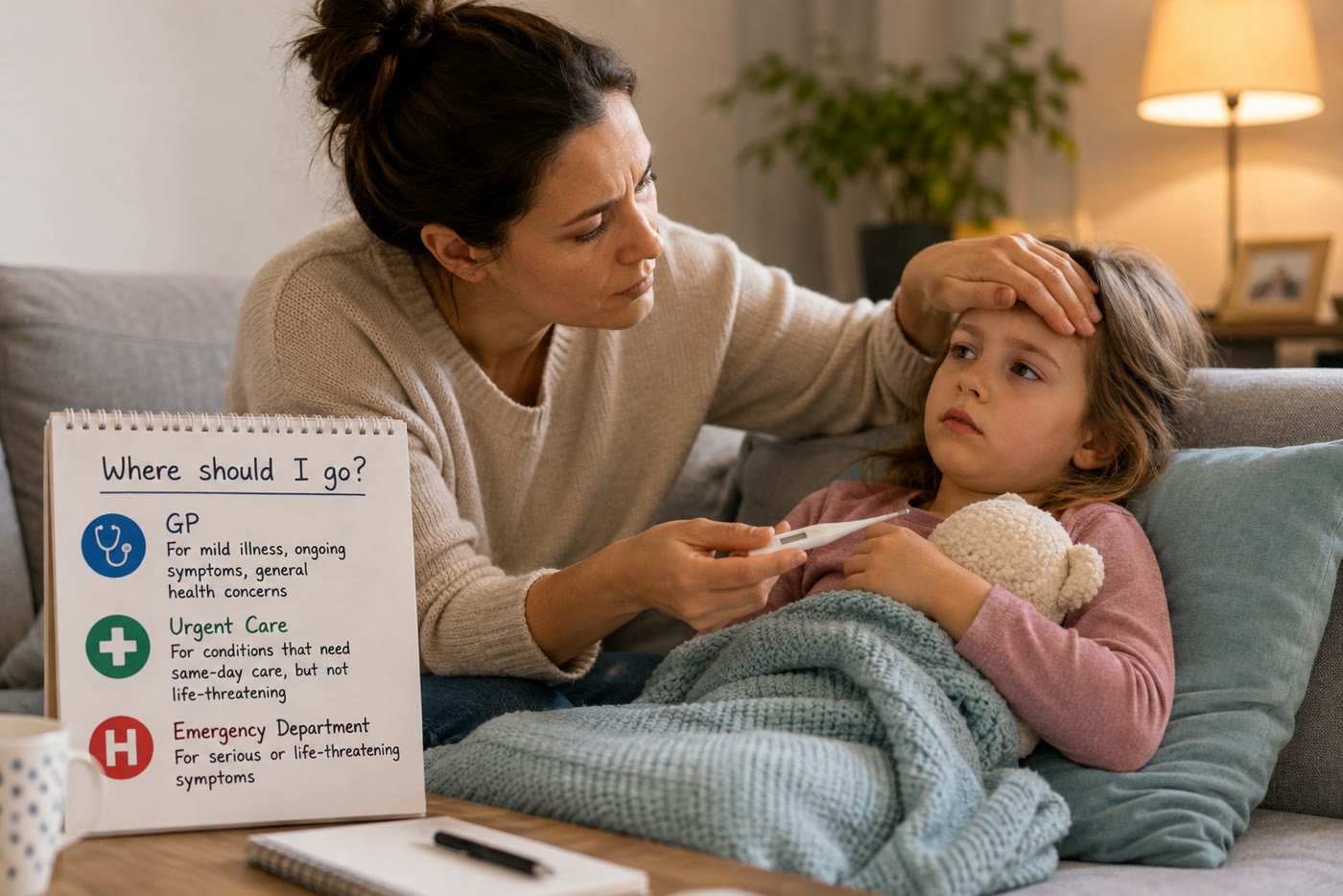
It’s 8pm and your child has a temperature. Or they’ve come off the trampoline wrong and won’t put weight on their ankle. Or they’ve had a cough for four days that doesn’t seem to be improving. You’re standing in the kitchen weighing up whether this can wait until morning, whether it needs a GP tomorrow, or whether you should be heading to the hospital right now.
Almost every parent has stood in that exact spot. Here’s a practical way to work through it.
Call triple zero (000) or go straight to the emergency department if:
Some situations don’t need weighing up: they need immediate action. Go straight to your nearest emergency department, or call an ambulance, if your child:
- is having difficulty breathing, or breathing very fast
- has skin that looks pale, blotchy or blue
- is unusually drowsy or hard to wake
- has had a seizure
- has a rash that doesn’t fade when you press on it
- is a baby under three months old with a fever of 38°C or higher
What counts as an emergency, and what doesn’t
Genuine emergencies are less common than the general anxiety of a sick or injured child might suggest. Most childhood illnesses: coughs, colds, mild fevers, ear pain, minor cuts and grazes: are things a GP can manage well, often without needing to be seen the same day.
The distinction usually comes down to how unwell your child actually looks, not just what symptom they have. A child with a fever who is still playing, drinking and interacting is in a different situation to a child with a fever who is floppy, unresponsive to you, or won’t drink at all. You know your child’s normal. Trust it.
What about fever specifically?
A fever on its own usually isn’t an emergency, but the right response depends heavily on your child’s age.
For a baby under three months old, any fever of 38°C or above needs immediate medical assessment: this age group can deteriorate quickly, so it’s treated as urgent regardless of how well the baby otherwise seems. For older babies and children, a fever that’s managed with fluids, rest and appropriate pain relief, and that comes with a child who still seems reasonably themselves, is generally something you can manage at home or bring to a regular GP appointment. See a doctor if the fever lasts more than a couple of days, if your child seems increasingly unwell, or if they’re drinking less and passing less urine than usual.
GP, urgent care, or emergency: what’s the difference?
GP appointment: Best for illnesses and injuries that aren’t urgent: ongoing coughs and colds, mild fevers, rashes that aren’t spreading rapidly, ear pain, minor injuries, or anything you’d like checked but that isn’t getting worse quickly. Your regular GP also knows your child’s history, which matters for anything ongoing.
Urgent care: In some parts of Australia, Medicare Urgent Care Clinics or hospital-based minor injury and illness clinics are available for problems that need same-day attention but aren’t life-threatening: things like minor fractures, wounds needing stitches or dressing, or a bad ear infection when your usual GP is booked out. These are generally bulk-billed with a Medicare card and don’t require an appointment. Availability varies by location, so check what is accessible locally.
Emergency department: Reserved for anything potentially life-threatening, or the red-flag symptoms listed above. EDs triage patients by urgency, not by arrival time, so the sickest patients are seen first: which also means a non-urgent presentation can mean a long wait.
When you’re genuinely not sure
This is the situation most parents actually find themselves in: not a clear emergency, not a clear ‘wait and see,’ but somewhere in between. A few options can help:
- Healthdirect’s free 24-hour helpline (1800 022 222) connects you with a registered nurse who can talk through your child’s symptoms with you.
- The healthdirect Symptom Checker is a short online questionnaire that gives guidance on whether to seek care and how urgently.
- Calling your usual GP clinic, even outside opening hours, may connect you with advice on whether the problem can wait for a standard appointment.
A note for Whitsundays families
Living in a regional area changes some of this calculus. Proserpine Hospital is the nearest facility with a 24-hour emergency department, and after-hours GP options can be more limited here than in a capital city. That’s part of why knowing what’s genuinely urgent and what can comfortably wait for a regular GP appointment matters more, not less, in this region.
Every parent gets this call wrong occasionally, in both directions: an ED visit that turns out to be nothing, or a wait-and-see that probably should have been checked sooner. That’s normal, and it isn’t something to feel bad about. If you’re ever unsure whether your child’s illness or injury needs a GP or something more urgent, a phone call to your regular clinic or the healthdirect helpline is a reasonable place to start.